The Best Budget Kitchen Knives of 2026
Ask working cooks about knives and a pattern shows up fast: the expensive showpieces stay in their cases, and the cheap workhorses do the actual cooking. Line cooks have run Victorinox, Mercer, and Dexter blades for decades because they are sharp, tough, and easy to replace.
The secret the knife industry does not advertise: a $25 knife handles 90 percent of kitchen work as well as a $200 one. What you give up is fit, finish, and edge retention. What you keep is your money.
Every pick below is available at KnifeCenter, and the whole core kit costs about $60. That is less than a single premium chef’s knife.
Our Picks at a Glance
- Best budget chef’s knife: Mercer Culinary Millennia 8″ Chef’s Knife (around $25)
- Best budget paring knife: Mercer Culinary Genesis 3.5″ Paring Knife (around $15)
- Best budget bread knife: Mercer Culinary Millennia 8″ Bread Knife (around $20)
- Worth the step up: Victorinox Swiss Classic 8″ Chef’s Knife (around $61)
- Budget santoku alternative: Victorinox Swiss Classic 7″ Santoku (around $62)
- Budget add-on for meat: Victorinox Forschner Fibrox 6″ Flexible Boning Knife (around $35)
The Smart Play: Skip the Block Set
The worst way to spend $60 on knives is a budget block set. You get one usable blade, four fillers, and a wooden block that hogs counter space.
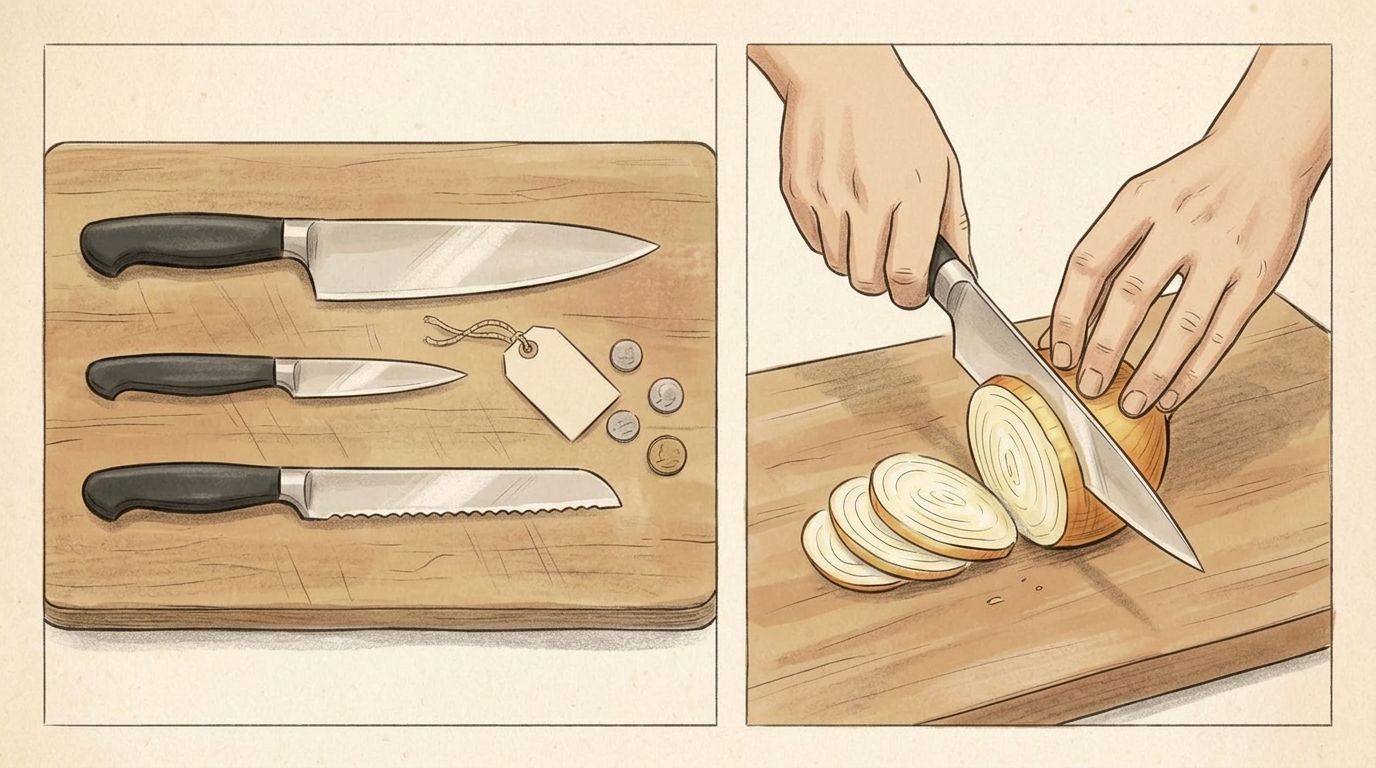
The better way is three individual knives: a chef’s knife, a paring knife, and a serrated bread knife. That trio covers almost every cutting task in a home kitchen, and buying individually means every dollar goes into a blade you will actually use.
The three budget picks below total about $60 together. We have a full breakdown of block sets versus individual knives if you want the long version.
Best Budget Chef’s Knife: Mercer Millennia 8″
The Mercer Millennia 8-inch chef’s knife is the workhorse culinary schools hand to students. The blade is stamped from high-carbon Japanese stainless steel, comes sharp out of the box, and takes a new edge quickly on any sharpener.
The textured santoprene handle grips securely even with wet or greasy hands. At around $25, you can cook hard with it, sharpen it often, and replace it years from now without a second thought.
The trade-off is refinement. The balance is more blade-heavy than a forged German knife and the softer steel needs more frequent sharpening. For a knife that will be your daily driver, neither matters much at this price.
Best Budget Paring Knife: Mercer Genesis 3.5″
A genuine rarity: a forged knife for around $15. The Mercer Genesis paring knife has a full tang, forged German steel, and a non-slip Santoprene handle, construction you normally see at four times the price.
A paring knife handles peeling, coring, trimming, and every small job where a chef’s knife feels clumsy. Because the blade is short and rarely touches a cutting board, even a budget paring knife stays sharp for a long time.
Best Budget Bread Knife: Mercer Millennia 8″
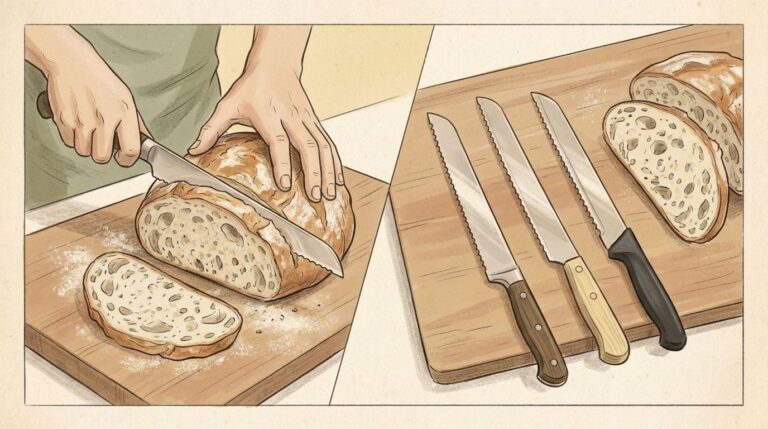
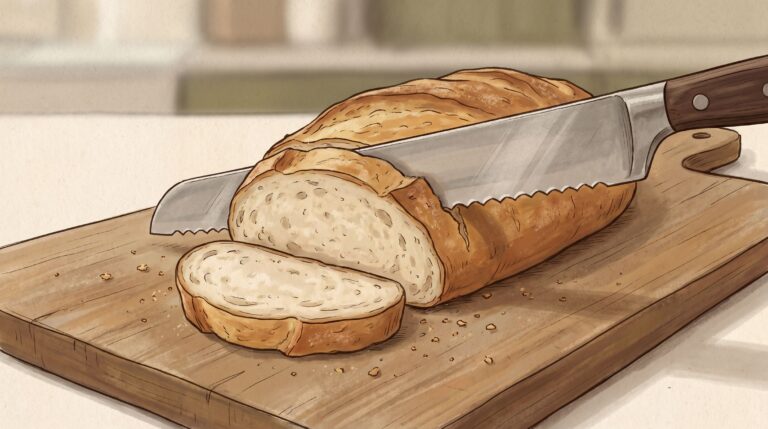
Same Millennia line, serrated edge. The wide, aggressive teeth saw through crusty sourdough without crushing the crumb, and the grippy handle holds steady on the pulling stroke.
At around $20 it was also our best-value pick in our full best bread knives roundup. Serrated edges stay sharp for years, which makes a budget bread knife the single safest cheap-knife purchase you can make.
Worth the Step Up: Victorinox Swiss Classic 8″
Victorinox is the budget brand professional kitchens trust most, and the Swiss Classic 8-inch chef’s knife is the current successor to the famous Fibrox Pro line. Swiss-made high-carbon stainless steel, a light agile feel, and a non-slip handle built for long prep sessions.
At around $61 it costs more than the Mercer, and the upgrade buys you noticeably better steel, better balance, and an edge that holds longer between sharpenings. If your budget stretches to it, this is the last budget chef’s knife you will need.
One heads-up if you go looking for the old Fibrox Pro chef’s knife: KnifeCenter lists it as discontinued. The Swiss Classic is the same working-kitchen formula with an updated handle.
Budget Santoku Alternative: Victorinox Swiss Classic 7″
Prefer a flatter blade and a chopping motion over rock-chopping? The Swiss Classic 7-inch santoku has a granton edge that keeps thin slices from sticking, and the shorter blade feels nimbler for cooks with smaller hands.
At around $62 it costs about the same as the Swiss Classic chef’s knife above, so this is a question of blade shape, not budget. Pick one or the other as your main knife, not both. Our santoku versus chef’s knife comparison covers how to choose.
Budget Add-On: Victorinox Fibrox 6″ Flexible Boning Knife
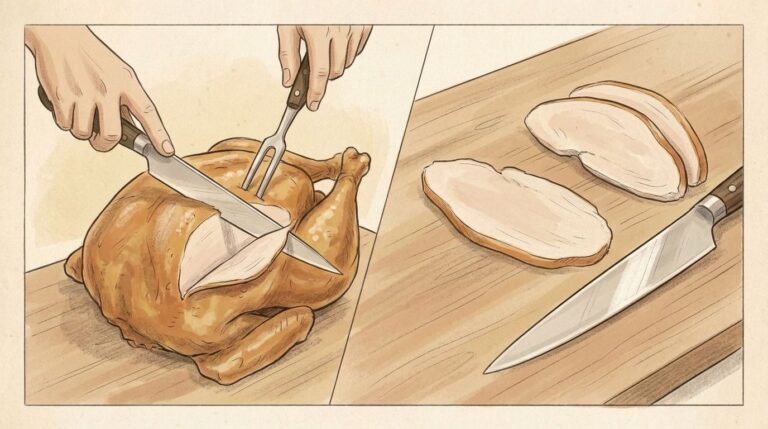
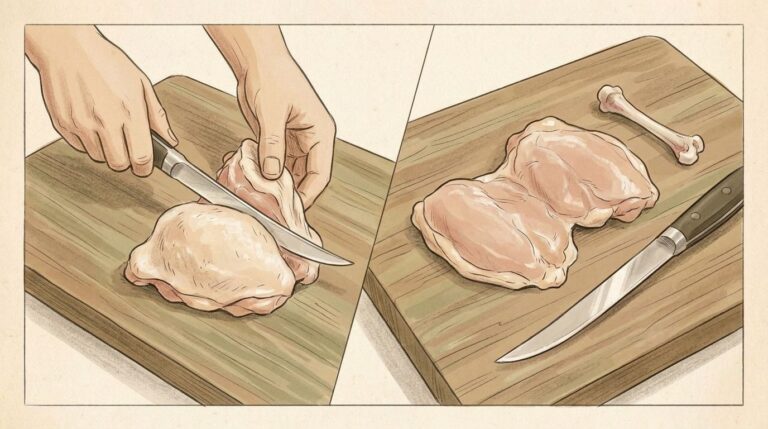
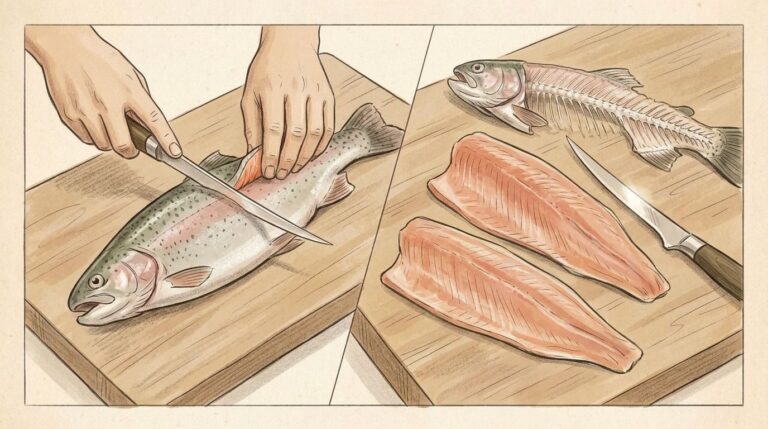
If you break down whole chickens or trim your own roasts, add the Victorinox Fibrox flexible boning knife. It is the same blade professional butchers and fish stations have leaned on for decades, and at around $35 it costs a fraction of a forged equivalent.
If you mostly cook boneless cuts, skip it. A boning knife earns its slot only when raw meat with bone is part of your routine.
What Makes a Budget Knife Good
Stamped is fine. Budget knives are stamped from a sheet of steel rather than forged from a billet. Stamped blades are lighter and slightly less rigid, and for most home cooking the difference is invisible.
Softer steel sharpens easily. Budget blades use softer stainless that dulls faster but takes a fresh edge in minutes. Since most home cooks put off sharpening, a knife that is easy to sharpen beats harder steel that is a chore to bring back.
Grippy synthetic handles. Santoprene, Fibrox, and TPE handles grip when wet, survive abuse, and never crack like cheap wood. On a budget knife this is a feature, not a compromise.
A sharp factory edge. The picks above all arrive genuinely sharp. Plenty of cheap knives do not, and no amount of savings fixes a blade that starts dull.
What You Give Up (Honestly)
Budget knives dull faster, so plan to sharpen every couple of months instead of twice a year. The handles are practical rather than beautiful. The balance is more blade-forward, and there is no bolster or full-tang heft on the stamped picks.
None of that changes what the knife does to an onion. A sharp $25 Mercer outcuts a dull $200 anything, every single time.
Care: Sharpening Matters More Than Price
The single biggest upgrade to a budget knife is keeping it sharp. A few passes on a honing rod before each session, and a real sharpening every two or three months, keeps a $25 blade performing like it just came out of the box.
And hand wash everything. Even budget knives die early in the dishwasher, and at these prices a minute at the sink is the entire maintenance budget.
Frequently Asked Questions
Are cheap kitchen knives worth buying?
Yes, if you buy the right ones. Brands like Mercer and Victorinox build genuinely good blades at low prices because professional kitchens buy them by the case. What you give up is refinement and edge retention, not cutting ability.
What is the best budget knife brand?
Victorinox and Mercer are the two names that come up constantly among working cooks, and for good reason. Dexter-Russell is the third classic commercial brand. All three build knives meant to be used hard, sharpened often, and replaced cheaply.
Should I buy a cheap knife set instead?
No. Budget block sets spread your money across one usable blade and four fillers when three good ones cover everything. Buy a chef’s knife, a paring knife, and a bread knife individually and you will own better tools for the same total.
How long do budget kitchen knives last?
With hand washing and regular sharpening, years to decades. The steel does not wear out; the edge just needs more frequent attention than premium steel. Plenty of former line cooks are still using the same Victorinox they bought twenty years ago.
When is it worth spending more?
When you cook daily, keep your knives sharp, and want better edge retention, balance, and feel. A forged German or Japanese chef’s knife is a real upgrade for an enthusiast. It is a luxury, not a requirement.
The Bottom Line
Spend about $60 on the Mercer Millennia chef’s knife, the Mercer Genesis paring knife, and the Mercer Millennia bread knife, and you have a complete kitchen kit that outperforms any block set near the price.
If the budget stretches, swap in the Victorinox Swiss Classic as your chef’s knife and keep the rest. Then spend the money you saved on a sharpener, because a sharp cheap knife beats a dull expensive one every day of the week.