Boning Knife: The Complete Guide (Flexible vs Stiff, Plus Our Picks)
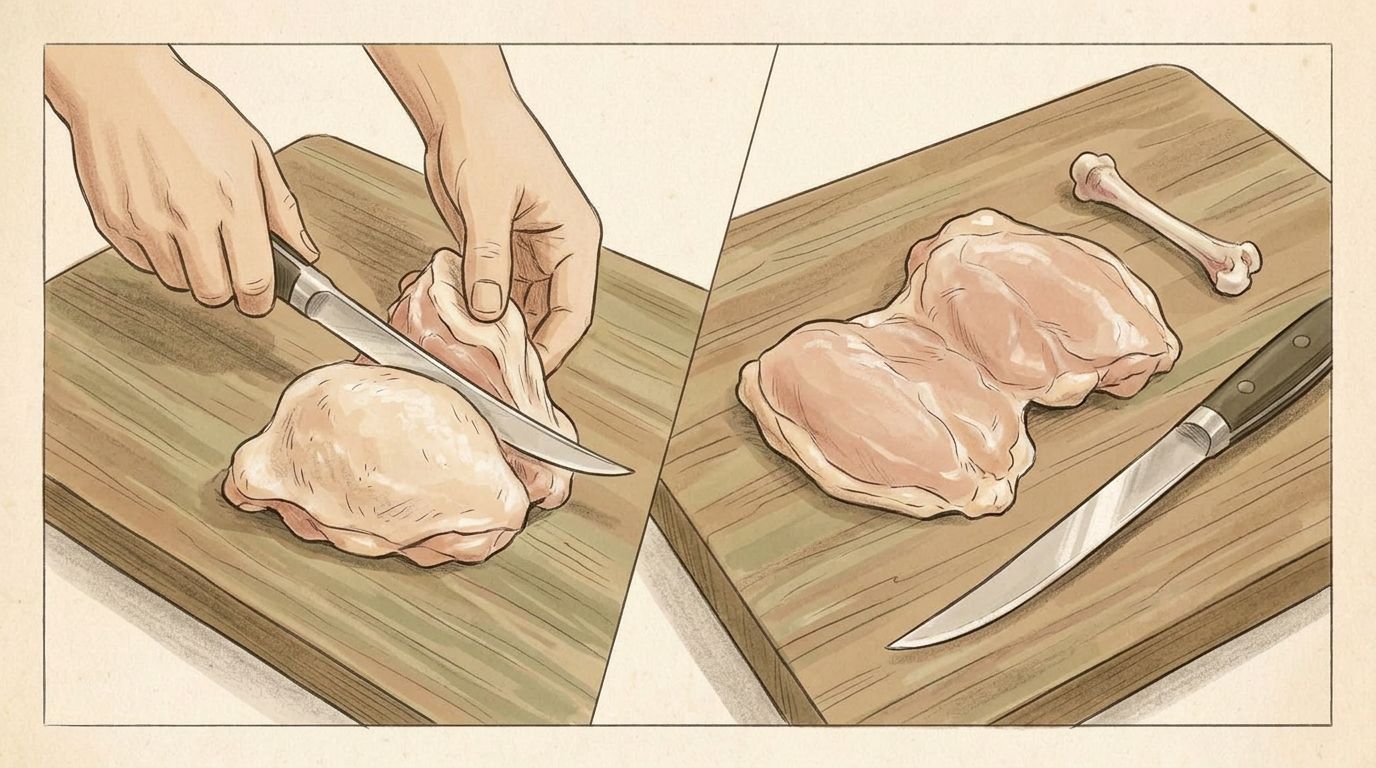
Try removing a chicken thigh from the bone with a chef’s knife. The wide blade can’t follow the curve, so you end up sawing instead of cutting, leaving meat stuck to the bone and a torn thigh on the board. The same thing happens trimming silver skin off a tenderloin or pulling a rack of pork ribs apart.
A boning knife is the fix. It is a long, narrow, pointed blade (usually 5 to 6 inches) built for one job: separating meat from bone with minimal waste.
The thin profile slides along ribs and joints. The pointed tip works into tight spots. The narrow blade flexes (or doesn’t, depending on the style) to follow contours a stiffer knife can’t.
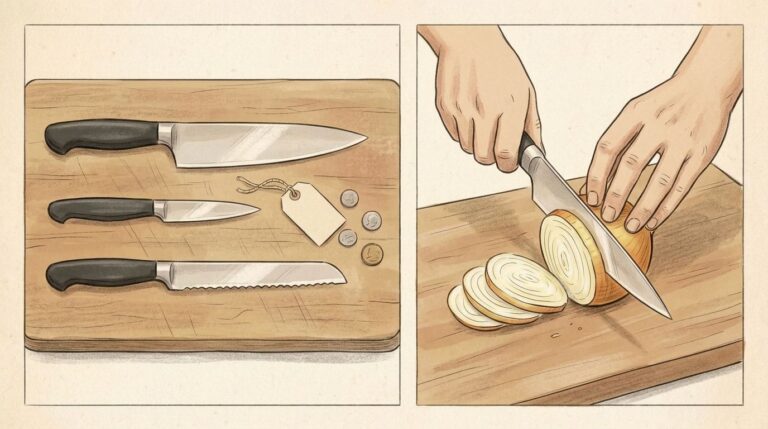
For a home cook who breaks down whole chickens, trims roasts, or processes game, a boning knife pays for itself fast. Most people own a chef’s knife and a paring knife and try to make those handle every task. They mostly can. Boning is where they fall short.
What a Boning Knife Is Used For
A boning knife works on raw protein. Bone, joint, sinew, silver skin, fat. Anywhere you need to separate one tissue from another with precision, this is the blade.
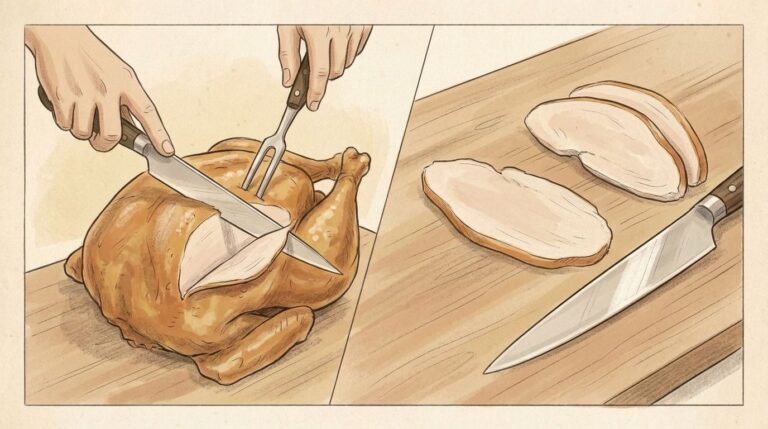
Breaking down whole chickens. The narrow blade slides along the keel bone, follows the wishbone, and pops the thigh joint cleanly. A chef’s knife can’t get into those gaps without crushing.
Trimming and tying roasts. Pulling silver skin off a beef tenderloin, trimming the fat cap on a pork loin, removing connective tissue before a roast goes in the oven. The thin tip cuts under tough membranes without removing the meat below.
Separating ribs. Pork ribs, lamb ribs, beef short ribs. Cut between the bones to portion a rack or to free up the meat for braising.
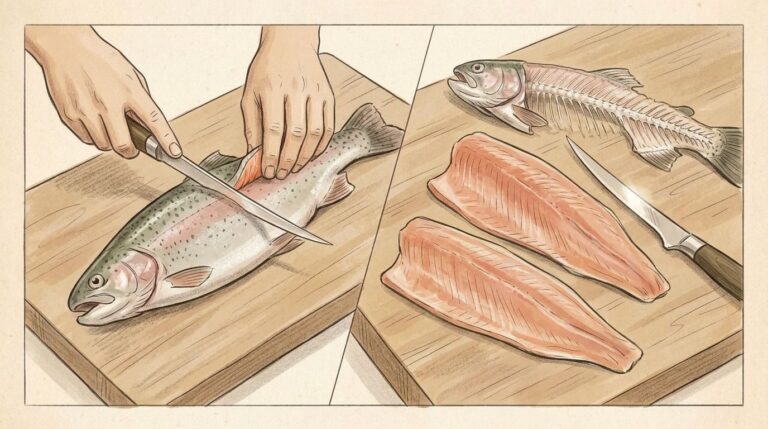
Removing skin from poultry and fish. Hold the skin against the board with one hand, slide the boning knife between skin and flesh at a low angle, and pull. A flexible blade tracks the contour and wastes nothing.
Butchering wild game. Deer, elk, hog, wild turkey. A 6-inch stiff curved boning knife is what most hunters reach for to break down a primal cut into roasts and steaks.
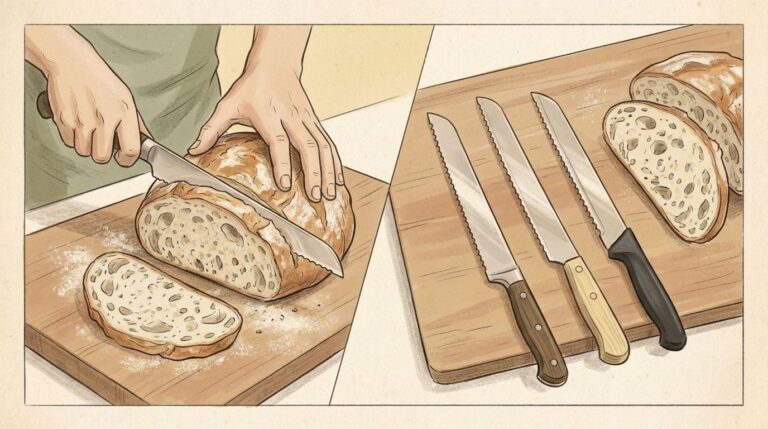
What a boning knife is not for: chopping vegetables, dicing onions, slicing tomatoes. The narrow blade has no belly for rocking and is too short for prep work. Reach for your chef’s knife instead.
Flexible vs Stiff Boning Knives
This is the most important decision when buying one. The same brand often sells flexible, semi-flexible, and stiff versions of the same boning knife at the same length, and they handle very differently.
Flexible boning knives bend along the blade so they can track the curve of a bone or follow the contour of a fish. Best for poultry, fish, and trimming silver skin. Most home cooks who break down whole chickens want a flexible blade. Wusthof, Henckels, Victorinox, and Mercer all sell flex versions in 5 and 6 inch lengths.
Stiff boning knives don’t flex at all. Better for heavier work like breaking down primal cuts of beef or pork, processing game, and any time you need to push through dense connective tissue. Butchers reach for stiff blades because they hold a line through harder work. Some brands also sell a semi-flexible middle ground that splits the difference.
If you can only own one and you cook a typical mix of poultry, pork, and beef at home, get a flexible or semi-flexible 6-inch blade. If you process game or break down large cuts, get a stiff curved 6-inch.
Curved vs Straight Blade
The second decision. Most home-kitchen boning knives have a straight blade. Most butcher and hunting boning knives have a curved blade that arcs upward toward the tip.
Straight blades are more versatile for general home use. They handle trimming, removing skin, and breaking down poultry without trouble.
Curved blades excel at separating muscle groups in large cuts. The upward curve lets you push the tip down into a primal while the heel follows behind, which is the standard butcher technique. If you process deer or break down whole pork shoulders, a curved blade is worth the specialization.
Boning Knife vs Fillet Knife
Easy to confuse. Both are long and narrow. The difference comes down to how much they flex and what each is designed to handle.
A boning knife is shorter (5 to 6 inches), thicker, and either stiff or moderately flexible. It is built for raw meat and bone of all kinds: chicken, pork, beef, game.
A fillet knife is longer (6 to 9 inches), thinner, and very flexible, almost whippy. It is built specifically for fish: gliding under the skin, separating fillets from the spine, removing pin bones.
You can use a flexible boning knife to fillet a small fish in a pinch. You should not use a fillet knife on a chicken or pork shoulder. The blade is too thin for the leverage that boning requires and will flex away from the bone when you need it to track along.
If you fish more than you butcher, get a fillet knife. If you cook more meat than fish, get a boning knife. If you do both regularly, get one of each.
What to Look for When Buying One
Length: 6 inches for most kitchens. Long enough to handle large birds and primal cuts, short enough for tight work. A 5-inch is fine for chicken-and-pork-only home use. Anything longer crosses into fillet territory.
Flex grade: match it to what you cook. Flexible for poultry and trim work. Stiff for big primals and game. Semi-flexible if you want one knife to do both.
Steel: high-carbon stainless. The same X50CrMoV15 or similar German cutlery steel used in chef’s knives works fine here. Boning knives spend a lot of time near bone, which dulls edges, so you want a steel that takes a quick touch-up well rather than one that holds a screamingly sharp edge but is hard to maintain.
Handle: grippy and washable. Boning is wet work. Fibrox, TPE, and other commercial-grade synthetic handles grip when slick with fat or water. Wood handles look nicer but require more care. Riveted full-tang construction is standard.
Sharp point. The tip does a lot of the work. Look for a needle-sharp point rather than a blunt or rounded tip.
How to Use a Boning Knife
Four habits cover most home use.
Cut against the bone, not through it. The blade rides along the surface of the bone, scraping meat away. You never push the edge into a bone. If you hit one, back off and adjust the angle.
Let the tip lead. The first inch of blade does most of the work, getting into joints and starting cuts. Hold the knife in a pinch grip so the tip is precise.
Use the heel for connective tissue. When you reach a tough tendon or joint capsule, switch to the heel of the blade and use a short rocking motion. The heel has more leverage than the tip.
Anchor the meat. Hold the protein steady with your non-knife hand, knuckles curled away from the blade. Boning knives are sharp and pointed and slip more than other kitchen knives. Pay attention.
Care and Sharpening
Boning knives dull faster than chef’s knives because the edge spends so much time scraping against bone. Plan to hone before each use and sharpen more often than your other kitchen knives.
Hone with a steel or ceramic rod before each session. Bone contact rolls the edge, and a few passes on a honing rod realigns it. Twenty seconds.
Sharpen every three to four months. More often than you would sharpen a chef’s knife because of the bone contact. A whetstone, pull-through, or electric sharpener all work. Our sharpening guide covers all three approaches.
Hand wash and dry immediately. Wet handles slip and a dishwasher will pit the steel, wreck wooden handles, and dull the tip. Never put a boning knife in the dishwasher.
Store with the tip protected. The needle point chips easily. A magnetic strip, in-block storage, or an edge guard keeps it intact.
Boning Knives We Recommend
Three picks: two for general home use at different prices, one for game and heavy butchering. All are available at KnifeCenter’s boning knife selection. The value pick below is also the boning knife in our best budget kitchen knives guide.
Best overall: Wusthof Classic 6-Inch Flexible Boning Knife. Forged German steel, full tang, riveted synthetic handle. The 6-inch flexible blade is the right tool for the way most home cooks actually use a boning knife: breaking down chickens, trimming roasts, removing skin from a pork shoulder. Sharp out of the box and the steel takes a hone well between sharpenings.
Best value workhorse: Victorinox Forschner Fibrox 6-Inch Flexible Boning Knife. The blade restaurant kitchens have leaned on for decades. Stamped rather than forged, so it’s lighter than the Wusthof and a fraction of the price. The Fibrox handle grips wet hands the way no wood handle ever will. Hard to beat at this price for someone who is buying their first boning knife.
For game and heavy work: Victorinox Forschner Fibrox 6-Inch Curved Boning Knife. Stiff blade, upward curve, same Fibrox handle as the workhorse. This is what hunters and home butchers reach for when breaking down deer, elk, or whole hogs. The curve lets you push the tip down into a primal while the heel follows. Not the right pick for chicken work, but unbeaten for the role.
Frequently Asked Questions
What is a boning knife used for?
Removing meat from bone with minimal waste. The narrow, pointed blade is designed for breaking down poultry, trimming silver skin and fat off roasts, separating ribs, removing skin from fish and chicken, and butchering game. It is a raw-protein tool, not a prep knife.
What size boning knife is best?
Six inches for most home cooks. Long enough to handle a whole chicken, a pork shoulder, or a leg of lamb without running short. A 5-inch is fine if you only break down small birds. Anything longer than 6 inches starts crossing into fillet-knife territory.
Can a chef’s knife do the same job?
Not well. A chef’s knife is too wide to follow the curve of a bone and too short on point precision to work into joints. You can break down a chicken with one, but you will leave more meat behind, take longer, and tear more tissue than with a proper boning knife.
For one or two birds a year, a chef’s knife is fine. If you break down whole birds or trim roasts weekly, a boning knife earns its drawer space quickly.
Is a boning knife the same as a fillet knife?
No. A boning knife is shorter (5 to 6 inches), thicker, and either stiff or moderately flexible. A fillet knife is longer (6 to 9 inches), thinner, and very flexible.
A boning knife is built for all raw protein. A fillet knife is built specifically for fish. They look similar but solve different problems.
Do I need a boning knife if I already own a chef’s knife and a paring knife?
Only if you regularly work with raw meat that has bone in it. If you mostly cook with already-broken-down cuts (chicken breasts, pork chops, ground beef), no, you do not need one. If you buy whole chickens, trim your own roasts, or process game, yes, a boning knife is the next blade worth adding to the core three.
The Bottom Line
A boning knife is the specialist knife for raw meat. Not glamorous, not flashy, but the only tool that makes breaking down a whole chicken or trimming a roast feel easy instead of frustrating. A 6-inch flexible blade with a synthetic handle covers what most home cooks need. A 6-inch stiff curved blade if you process game.
Once you have your essential kitchen knives covered and a way to keep them sharp, a boning knife is the next blade that earns its drawer space if you cook from whole proteins.