Can You Put Knives in the Dishwasher? (Why You Shouldn’t)
You want a simple answer. If you care about sharpness, safety, and lifespan, do not put kitchen knives in the dishwasher.
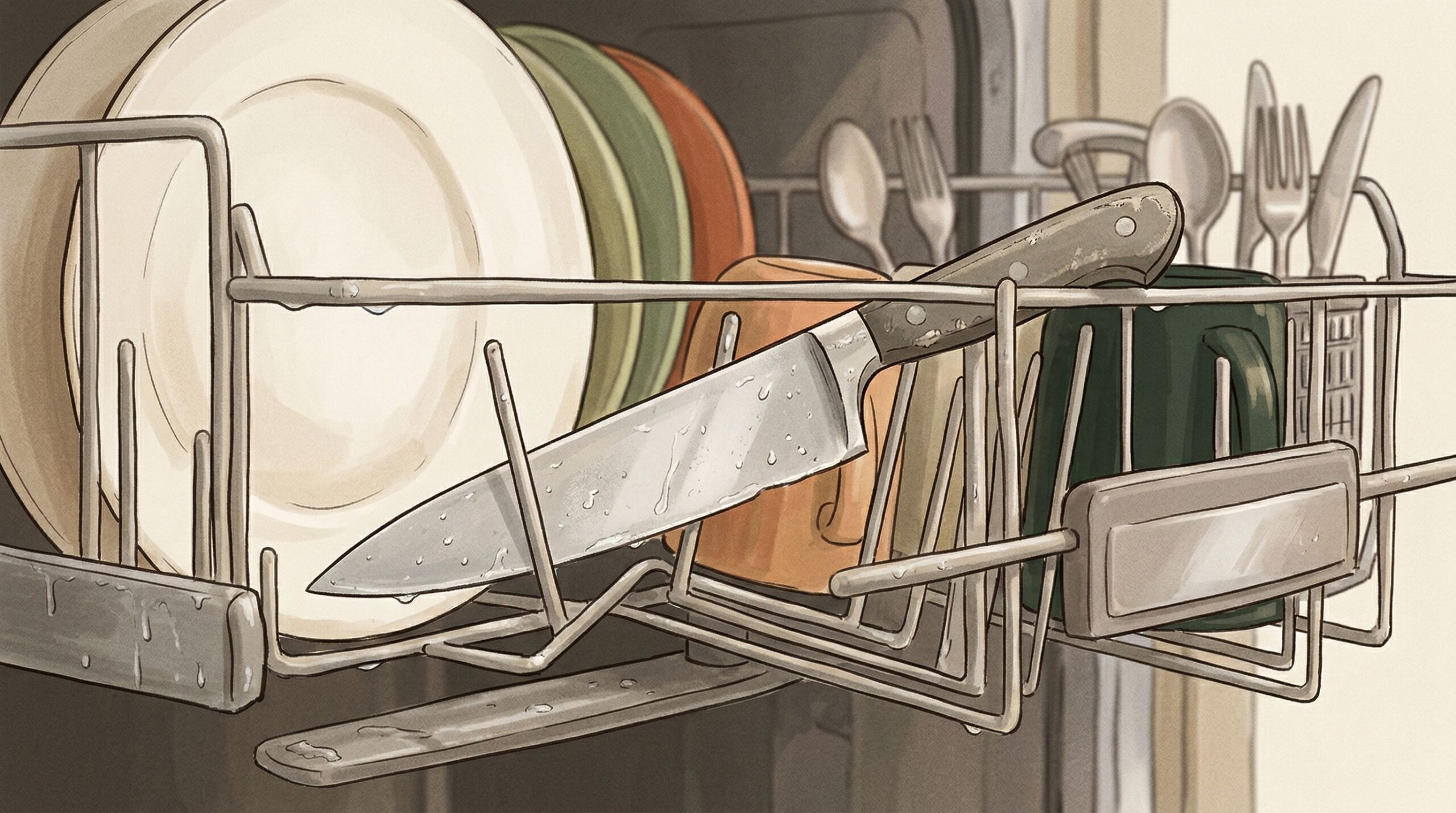
A dishwasher blasts heat, strong detergents, and high-pressure water across everything in the racks. Knives rattle, bang into other items, and sit in steamy, caustic water while they dry. This wears down the edge, stains and pits the steel, and wrecks many handles. Even stainless steel can rust or pit when you run it through repeated dishwasher cycles.
The bottom line is, if you care at all about the longevity of your kitchen knives, you will never put them in the dishwasher! Always wash them by hand, dry immediately, and put away in a safe place until their next use and they can last for years and years.
David C. Andersen
Knives in dishwasher: why it ruins blades and risks safety
A dishwasher is a harsh place for a knife. The cycle uses hot water and aggressive detergents. Spray arms slam water at speed, which makes blades move and rub. That motion rolls the edge and can cause small chips.
The thin steel at the edge takes the worst beating. Long thin blades like fillet knives and boning knives are especially vulnerable because there is so little steel to absorb the abuse.
Dishwashers usually do not get hot enough to ruin a knife’s heat treatment outright. The real problem is repeated heat cycling combined with moisture, which weakens the thin steel at the edge and accelerates micro-corrosion that feels like rapid dulling.
Detergents are strong and alkaline. Many dishwashers also use water-softening salts and rinse aids. These chemicals are especially aggressive on steel finishes and cutting edges, even when the detergent itself seems mild. They can discolor steel, tarnish finishes, and leave residue that speeds corrosion.
Stainless resists rust, but it is not rust-proof. Expect spots, staining near the edge, and even pitting over time.
Handles suffer too. Wood swells and shrinks. Glues soften. Some plastics warp. You end up with loose rivets and gaps that trap gunk. On knives with liners or hidden pins, water can also creep inside the handle. Over time, internal corrosion weakens the structure even if the outside still looks fine.
There is a safety risk when unloading. A knife can flip sharp-side up or slide out of a rack. Cuts happen fast, especially if kids help with dishes.
Many makers say hand wash only. Some warranties do not cover dishwasher damage.
Never put knives in the dishwasher.
Which knives are most at risk in a dishwasher?
All kitchen knives do better with hand washing. Some suffer faster than others, due to blade steel, coatings, and handle materials.
Some inexpensive knives appear to survive the dishwasher better. That is usually because their steel is softer and more corrosion-resistant, not because the dishwasher is safe. The tradeoff is poor edge retention and faster dulling in normal use.
Carbon steel and high carbon stainless pit and rust quickly
More carbon means a sharper, longer-lasting edge. It also means less corrosion resistance. In a hot, wet, caustic bath, these steels spot and rust fast.
You may see orange rust on carbon steel and a gray patina that turns rough. Pitting near the edge is hard to fix. It weakens the cutting line and takes more metal to remove.
Stainless steel still stains: why alloys do not save you
Stainless builds a thin chromium oxide layer that blocks rust. Detergents and heat can damage that layer. You may see discoloration, small rust spots, and haze, most often near the edge and around the bolster. The edge is thin and gets hit by water jets, so it wears faster.
On knives with bolsters or tight handle junctions, moisture can get trapped where you cannot fully dry it. This leads to crevice corrosion that often goes unnoticed until sharpening exposes dark pits or weak steel.
Ceramic, coated, and serrated blades chip and flake
Ceramic is very hard, but it is brittle. Bumps can chip the cutting edge or the tip. Nonstick coatings can peel or flake under heat and harsh cleaners. Serrated blades catch on racks and chip at the points. Those tips are hard to repair and often need pro work.
Full-tang vs rat-tail: why natural handles suffer more
Full-tang knives with wood or leather handles soak up water. The scales can swell and lift, which loosens rivets. Rat-tail tangs use a narrow tail with a glued handle. Heat and detergents can weaken the adhesives and open gaps. Natural materials like wood, horn, or bone are at high risk for cracking and warping.
Is putting knives in the dishwasher a myth?
Some people think the advice against dishwashing knives is overblown. It is not. The damage is real, measurable, and well-documented by every major knife manufacturer.
The confusion comes from two places. First, some knives are marketed as “dishwasher safe.” That label means the knife will not fall apart in one cycle. It does not mean the knife will stay sharp, corrosion-free, or in good condition over time.
Second, cheap knives with soft stainless steel sometimes seem fine after dishwashing. That is because the softer steel resists corrosion better, not because the cycle was gentle. The tradeoff is poor edge retention whether you hand wash or not.
Here is what actually happens inside a dishwasher cycle:
- Alkaline detergents attack the chromium oxide layer that protects stainless steel. Zwilling’s official care guide warns that “dishwasher tablets often contain aggressive chemicals which can damage the surface of plastic and steel.”
- Water jets and vibration rattle blades against racks, other utensils, and dishes. This rolls and chips the thin cutting edge.
- Heat and prolonged moisture accelerate micro-corrosion along the edge where the steel is thinnest. This feels like rapid dulling.
- Handles absorb water. Wood swells and cracks. Adhesives soften. Rivets loosen. Even synthetic handles can warp under sustained heat.
This is not a myth or an opinion. Every major brand, including those that label their knives “dishwasher safe,” recommends hand washing.
Are any knives actually dishwasher safe?
Several brands label their knives as dishwasher safe, but every one of them still recommends hand washing. “Dishwasher safe” means the knife will survive the cycle, not that it is the best way to care for it.
Wusthof
Wusthof’s official care instructions are clear: “Do not place knives in the dishwasher.” They cite high temperatures and blade-on-blade contact during the wash cycle as the main risks. Wusthof does not label any of their knives as dishwasher safe.
Zwilling and Henckels
Zwilling states their knives are “actually dishwasher-safe, but only at temperatures of 55 degrees C and lower.” However, they follow this with a strong recommendation to hand wash instead: “The less you use the dishwasher, the more you’ll get from your knives.”
Henckels (a Zwilling brand) says most of their knives are dishwasher safe but adds: “We do not recommend putting knives in the dishwasher. Banging against other cutlery or pots and pans will nick the edge.” The Henckels Pakka and Henckels Compass Damascus lines are not dishwasher safe at all.
Cutco
Cutco says their knives are dishwasher safe but recommends hand washing. Their official guidance notes that “dishwashers can be hard on knives, as the agitation can cause blades to bump up against other items, possibly damaging the sharp edge.” They also warn that sharp edges can damage the dishwasher’s protective rack coating. If you must use the dishwasher, Cutco recommends laying knives flat in the rack.
Cuisinart
Many Cuisinart knife sets are marketed as dishwasher safe, especially their stainless steel and color-coded lines. These are budget-friendly knives with softer steel that resists corrosion well. The tradeoff is that they do not hold an edge as long as higher-end knives. Even so, hand washing will keep them in better shape.
The bottom line on “dishwasher safe” knives
If a knife is labeled dishwasher safe, it will not self-destruct in one wash. But it will dull faster, show wear sooner, and need sharpening more often. Should you put knives in the dishwasher? No, even when the label says you can.
The right way to clean knives by hand, fast and safe
Hand washing does not need to be slow. You can clean, dry, and put away a knife in about a minute. This also keeps edges sharp and your hands safe.
60-second routine: wash, rinse, dry, and put away
- Wipe the blade with a damp sponge and a drop of mild dish soap.
- Rinse with warm water, edge facing away from your hand.
- Dry right away with a clean towel, blade and handle.
- Return the knife to a block, magnetic strip, in-drawer tray, or a blade guard. Not sure which option is right for you? See our guide on knife blocks vs individual knives.
Avoid abrasive pads that scratch steel. Do not leave knives in the sink or in a wet towel. That dulls edges and invites rust.
Sanitize without the dishwasher: simple safe methods
- 70 percent isopropyl alcohol: wipe the blade, then let it air dry.
- Mild bleach solution: 1 tablespoon bleach in 1 gallon of water. Dip or wipe, then rinse and dry.
- Near-boiling water: pour over the blade, then dry at once.
Keep chemicals away from wood handles. If you sanitize the blade, avoid soaking the handle.
Rescue plan if a knife went through the dishwasher
- Remove light rust with a soft scrub pad or a rust eraser.
- For stubborn spots, use a baking soda paste or Bar Keepers Friend. Rinse and dry.
- Hone the edge to fix light rolling. If dull, sharpen on a stone or send it out.
- Wipe a thin coat of food-safe mineral oil on the blade to protect it.
- For dry wood handles, rub in food-safe mineral oil and wipe off the excess.
This will not fix deep pits or chips, but it brings a tired knife back to working shape.
Smart storage that protects edges and fingers
Loose drawers are unsafe and hard on edges. Pick a storage method that shields the blade and keeps it dry.
| Storage Option | Pros | Cons | Tips |
|---|---|---|---|
| Wood block | Stable, easy access | Can trap moisture, collects crumbs | Keep it dry and clean the slots |
| Magnetic strip | Saves counter space, air dries blades | Needs careful placement | Place knives spine-first, keep strip clean |
| In-drawer tray | Safe, hidden, child-resistant | Needs drawer space | Dry knives fully before storing |
| Blade guards | Cheap, portable, protects edges | Adds a step before each use | Use snug guards that cover the edge |
For a magnetic strip, mount it away from heat and steam. Place the spine on the strip first, then roll the edge in. To remove, roll the edge off last to avoid chipping.
Care tips that keep knives sharp longer and save money
Small habits cut sharpening costs and make prep easier and safer. Think daily touches, plus some weekly care.
Honing vs sharpening: when and how to do each
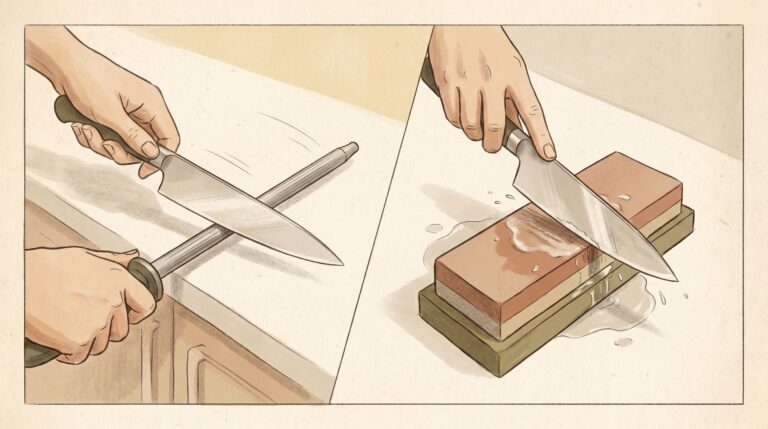
Honing straightens the edge. It does not remove much metal. Do it 1 to 2 times per week, or before big prep. Use a ceramic or steel rod. Keep a light touch and a steady angle.
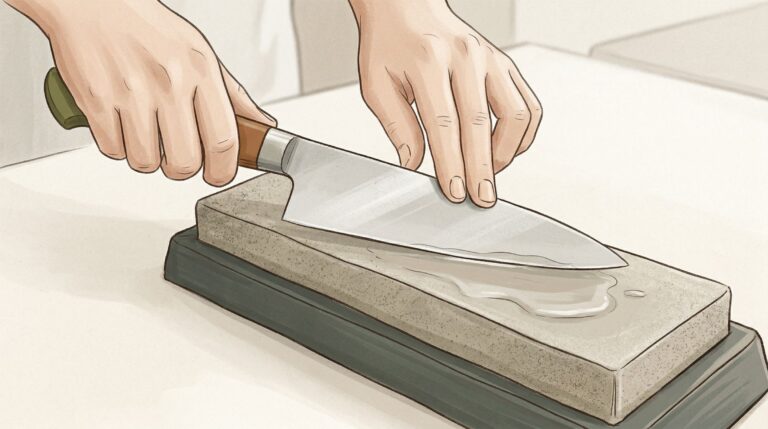
Sharpening removes metal to form a new edge. Do it when honing no longer helps and the knife slides on a tomato. This goes for every blade you own, from your chef knife to your paring knife. Use a whetstone or a pro service. A home user might sharpen every few months, based on use.
Best cutting boards for sharp knives
End-grain wood and quality plastic cutting boards are kinder to edges. They give a bit under the blade, which slows wear. Avoid glass, stone, and ceramic boards. Those dull edges fast and can chip tips.
Wash boards with warm soapy water and dry them well. For wood, oil the board when it looks dry.
Light oil and rust prevention after washing
Wipe a thin coat of food-safe mineral oil or camellia oil on clean, dry blades. This is key for carbon steel. Skip cooking oils. They can get sticky and smell. Store knives in a dry place with low humidity.
If you live near the coast or in a humid area, oil more often. A few seconds after washing saves hours of repair later.
Kitchen Knives in Dishwasher: Frequently Asked Questions
Can you put knives in the dishwasher?
No. Heat, harsh detergents, and water jets dull the edge, stain steel, and damage handles. Hand wash, dry right away, and store safely.
Does the dishwasher dull knives?
Yes. Spray arms make blades rattle and rub, which rolls and chips the edge. Detergents also attack the thin steel near the edge, so it loses sharpness faster.
Are stainless steel knives dishwasher safe?
No. Stainless resists rust, it is not rust-proof. Dishwashers can cause spots, haze, and pitting, especially near the edge and bolster. Many makers exclude dishwasher damage from warranty coverage.
When a knife is labeled “dishwasher safe,” it usually means it will not fail immediately, not that it will stay sharp, corrosion-free, or structurally sound over time.
How to load sharp knives in the dishwasher?
The safe answer is, do not. If you must on rare occasions, follow this to reduce risk:
- Point blades down in the utensil basket, never up.
- Keep knives separated so edges do not touch anything.
- Skip heated dry, remove and hand dry right away.
- Do not wash with pots, glass, or other items that can bang into the blade. This still shortens knife life compared to hand washing.
Can you put steak or chef’s knives in the dishwasher?
You can, but you should not. Steak knives often have serrations that chip and trap residue. Chef’s knives dull quickly and handles can loosen. Hand wash both types.
Are Wusthof knives dishwasher safe?
No. Wusthof’s official care instructions say “do not place knives in the dishwasher.” They do not label any models as dishwasher safe. Hand wash with mild soap, rinse, and dry right away.
Are Henckels knives dishwasher safe?
Most Henckels knives are technically dishwasher safe, but Henckels does not recommend it. Their official guidance says dishwasher cycles nick the edge and damage handles. The Henckels Pakka and Henckels Compass Damascus lines are not dishwasher safe at all and must be hand washed.
Are Cuisinart knives dishwasher safe?
Many Cuisinart knife sets are labeled dishwasher safe, especially the stainless steel and color-coded lines. These knives use softer steel that resists corrosion in the dishwasher. However, hand washing still keeps the edge sharper for longer.
Can Cutco knives go in the dishwasher?
Cutco says their knives are dishwasher safe, but they recommend hand washing. Their official care page warns that dishwasher agitation can damage the sharp edge and that knife blades can cut the dishwasher’s protective rack coating. If you must use the dishwasher, Cutco recommends laying knives flat in the rack.
Are Zwilling knives dishwasher safe?
Zwilling says their knives are dishwasher safe at temperatures of 55 degrees C (131 degrees F) and lower. However, they strongly recommend hand washing and warn that dishwasher tablets contain aggressive chemicals that damage steel and plastic. Their advice: “The less you use the dishwasher, the more you’ll get from your knives.”
The habit that keeps your knives sharp
Repeated dishwasher cycles shorten knife life, dull edges, and raise the odds of handle damage and kitchen cuts. Hand washing takes under a minute: wash, rinse, dry, put away. Do that every time and your knives will stay sharp and safe for years. For more on keeping your edge, see our sharpening guide.