Carving Knife: The Complete Guide (Turkey, Roasts, and More)
You spent five hours on a Thanksgiving turkey. Then you reach for a chef’s knife to carve it, and the first slice comes off ragged with a torn edge and a divot in the meat. The bird tastes the same. It just looks like the dog got to it first.
A carving knife is the fix. It is long, narrow, and built to slice cooked roasts, turkey, ham, brisket, and prime rib into clean, even pieces with a single pulling stroke. Most kitchens do not need one every day. The two or three days a year you cook a big roast, nothing else comes close.
If you only own three knives, a carving knife probably is not one of them. But once you have the essentials covered, this is the knife that earns its keep on holidays.
What a Carving Knife Is Used For
A carving knife slices cooked proteins. That is the whole job. The long blade lets you draw through a roast in one stroke without sawing back and forth, which is what causes ragged edges and lost juice.
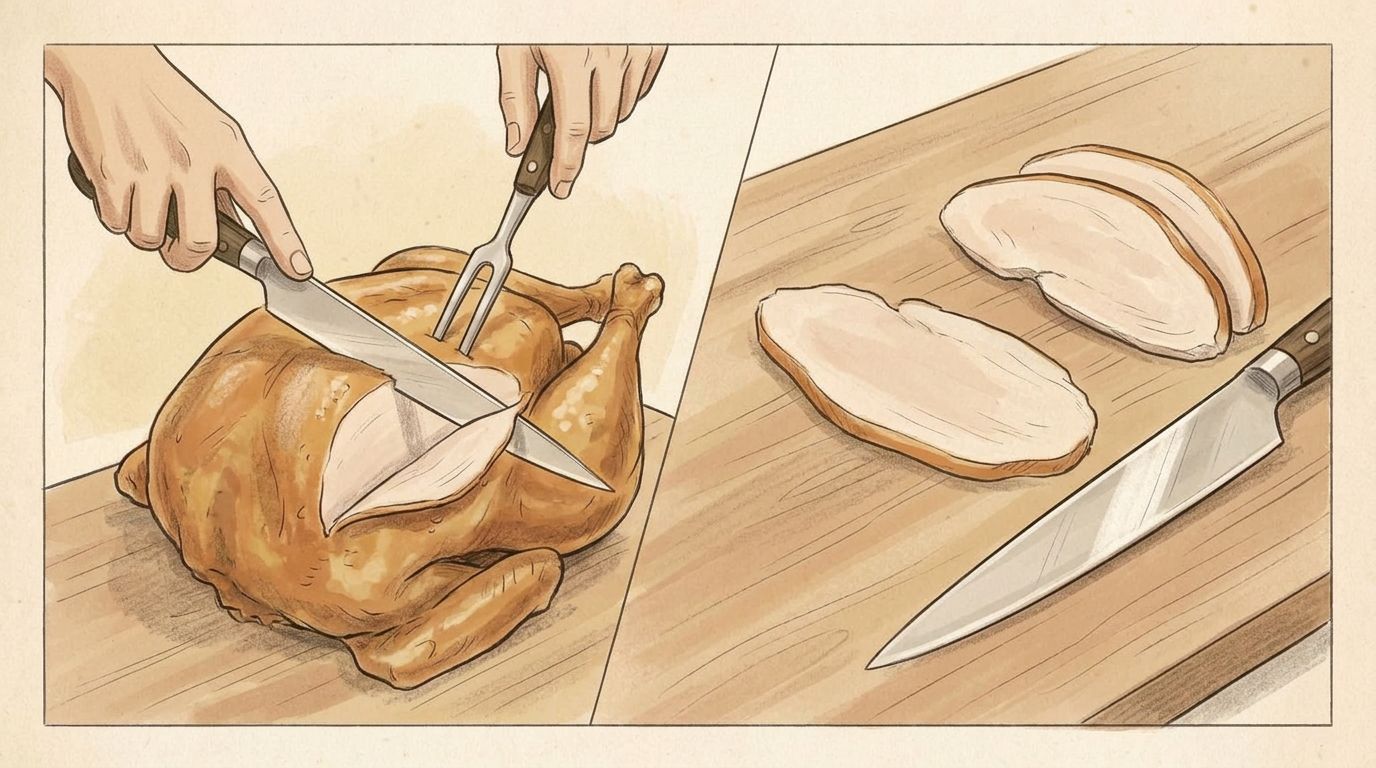
Roast turkey and chicken. The blade follows the contour of the breast for thin, even slices. Long enough to glide from one side to the other in a single pass.
Beef roasts and prime rib. Standing rib, eye of round, top round. A long carving knife slices clean across the grain so each piece holds together on the plate.
Brisket. A 12-inch blade is long enough to slice a full packer brisket against the grain in one pull. Pitmasters call this style a slicer or brisket knife. Same tool.
Ham, leg of lamb, pork loin. Anything where you want even, presentable slices off a large cooked piece of meat.
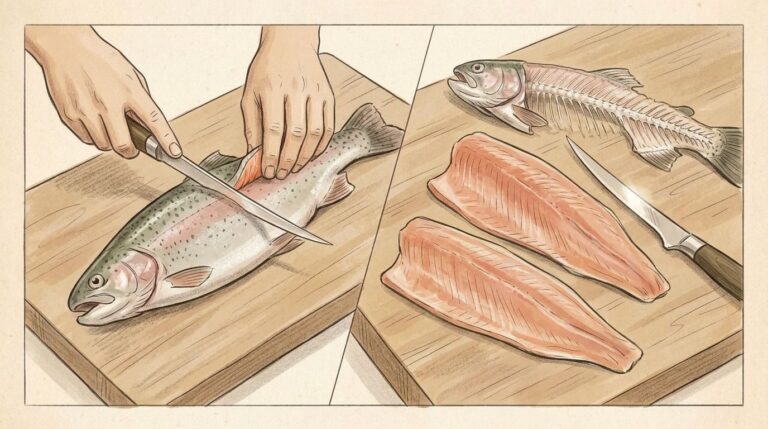
Smoked salmon and large fish. The thin blade glides under the skin without tearing the flesh. For breaking down whole fish from the start, a fillet knife is built for the job.
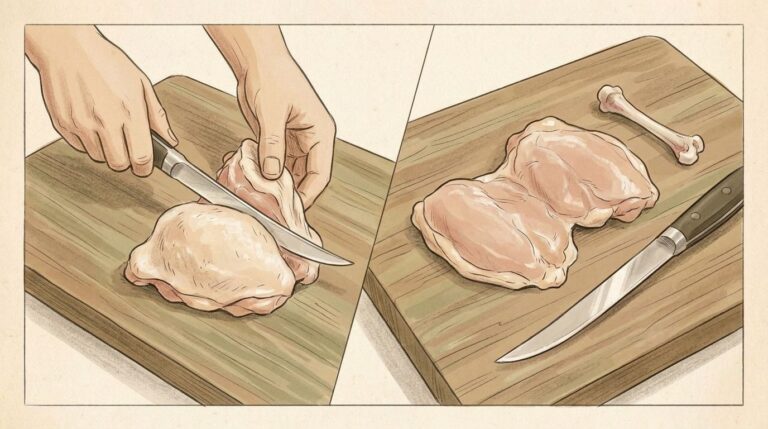
What it is not for: anything raw, anything with bone, anything you would dice. A carving knife has no business doing prep work. Use a chef’s knife for general prep, or a boning knife when you need to separate raw meat from bone.
What Makes a Carving Knife Different
Three features set a carving knife apart from every other blade in the drawer.
Length. Most carving knives run 8 to 12 inches. The standard kitchen size is 9 or 10 inches. Brisket slicers go up to 14. The extra length means you can pull through a roast in a single stroke instead of dragging the blade back and forth, which is what tears meat fibers.
Narrow profile. A carving knife is much thinner top-to-bottom than a chef’s knife. Less metal contacting the meat means less drag, less juice squeezed out, and a cleaner surface on every slice.
Pointed or rounded tip. Most kitchen carving knives come to a point so you can work around bones and joints. Some traditional models have a rounded tip designed for slicing only, no piercing. Either works for most home use.
You will also see two edge styles:
- Plain edge. Standard sharp edge, easy to maintain at home. Works for everything.
- Granton or hollow edge. Oval indentations along the blade that create air pockets so slices release cleanly instead of sticking. Common on brisket slicers and ham knives.
Carving Knife vs Chef’s Knife
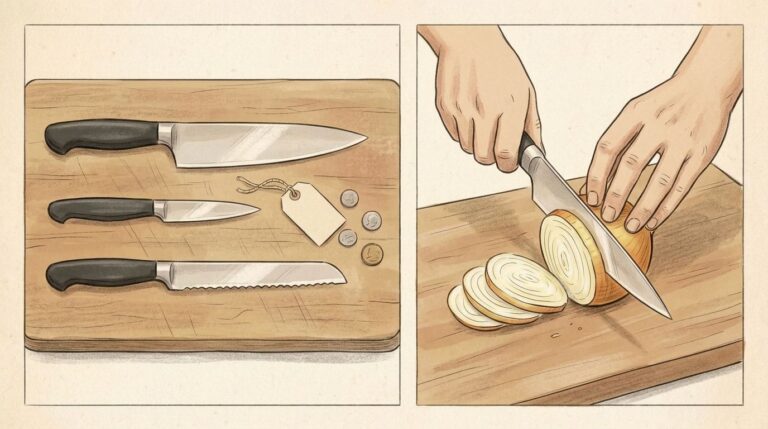
A chef’s knife is short, wide, and built for prep: chopping onions, mincing garlic, breaking down chicken. The wide belly is what lets you rock through vegetables. That same wide belly works against you when you carve a roast. The blade is too short to cross the meat in one stroke and too thick to slide cleanly through the surface, so you end up sawing.
A carving knife is the opposite: long, narrow, and useless for prep. It cannot rock-chop. It cannot mince. But it slices a turkey breast like nothing else can.
If you cook one or two large roasts a year, a sharp chef’s knife will get the job done. If you carve a turkey, ham, or brisket more than a few times a year, a dedicated carving knife is worth the drawer space.
Electric Carving Knives
Electric carving knives use two thin serrated blades that move in opposite directions. The motion does the cutting for you, which makes them genuinely useful if you have wrist or grip issues, or if you carve a lot of bread and turkey at scale.
Two trade-offs to know. First, the slices are not as clean as a sharp manual blade in skilled hands. The serrations leave a slightly rougher surface. Second, electric models live in a drawer 360 days a year and break long before a good manual carving knife wears out.
If you already keep your knives sharp, a manual carving knife will give better results. If you do not, an electric model is forgiving and gets the bird sliced.
The Carving Set: Knife Plus Fork
Most carving knives are sold as a set with a long, two-tined fork. The fork is not optional. It anchors the roast so you can pull straight through with the knife without the meat shifting.
Hold the fork in your non-dominant hand, push the tines firmly into the part of the roast you are not slicing, and let the knife do the rest. Trying to carve a turkey breast without a fork is how home cooks end up with a board full of shredded meat.
What to Look for When Buying One
Length: 9 to 10 inches for most kitchens. Long enough to cross a turkey breast in one stroke, short enough to handle and store. Step up to 12 inches if you smoke briskets or carve large prime ribs regularly.
Steel: high-carbon stainless. Holds an edge well, resists rust, and is easy to maintain. German steel (X50CrMoV15) is the home-kitchen workhorse. Japanese steels like VG-10 or AUS-10 hold sharper edges but cost more and need more care.
Edge: plain or granton. Plain edges are easier to sharpen at home. Granton edges release sticky meats like ham and brisket more cleanly. Either works.
Handle: full tang, comfortable grip. The blade should run all the way through the handle. Synthetic handles like POM or G-10 hold up better than wood over years of use. A pinch grip is easier on a balanced knife with a bolster.
Comes with a fork. If it does not, buy a carving fork separately. You need both.
How to Use a Carving Knife
Three rules cover most of it.
Let the meat rest first. A roast right out of the oven loses juice the second you cut it. Rest beef and lamb 15 to 20 minutes, turkey 20 to 30 minutes, brisket up to an hour. Tent loosely with foil.
Slice against the grain. Look at the meat for the direction the muscle fibers run, then cut perpendicular to them. Slicing with the grain leaves long, chewy fibers in every bite. Slicing across them shortens the fibers, which is what makes meat feel tender on the tongue.
Pull, do not saw. Place the heel of the blade on the meat and draw the knife toward you in a single long stroke. Let the length of the blade do the work. Sawing back and forth tears the surface and squeezes juice out.
Anchor with the fork in your other hand. Slow strokes. Even thickness. That is the whole technique.
Care and Sharpening
A carving knife is the easiest knife in the kitchen to keep sharp because it only comes out a few times a year. The edge stays cleaner longer than a chef’s knife that sees daily prep.
Hone before each use. A few passes on a honing rod realigns the edge. Honing is not the same as sharpening, and it takes 20 seconds.
Sharpen once every year or two. Most home carving knives only need real sharpening every 12 to 24 months. Use a whetstone or take it to a sharpener. Our full guide to sharpening kitchen knives covers both.
Hand wash and dry immediately. Never put a quality carving knife in the dishwasher. Heat warps the blade, detergent pits the steel, and rattling around dulls the edge.
Store it on a magnetic strip or in a sheath. A loose drawer chips long thin blades fast.
Carving Knives We Recommend
Three picks at three price points. All are available at KnifeCenter’s slicing and carving selection.
Best overall: Wusthof Classic 2-Piece Carving Set (Hollow Edge). Forged German steel, full tang, granton edge that releases sticky slices like ham and brisket cleanly. Comes with the matching Wusthof Classic carving fork, so you have everything you need in one box. Worth the splurge if you carve large roasts a few times a year.
Best value workhorse: Victorinox Forschner 12-Inch Granton Edge Slicing Knife. The blade restaurant kitchens have leaned on for decades. Lightweight, razor sharp out of the box, and a fraction of the price of forged knives. The 12-inch length doubles as a brisket slicer. You will need to buy a carving fork separately.
For brisket and barbecue: Wusthof Gourmet Brisket Slicer (Round End). Built for big proteins. The long blade pulls through a packer brisket in one stroke, and the rounded tip plus hollow edge keeps fatty slices from sticking. Heavier in the hand than the Victorinox, and two inches longer at 14.
Frequently Asked Questions
Can I use a chef’s knife instead of a carving knife?
For one or two roasts a year, yes. A sharp chef’s knife will carve a turkey, just with rougher slices because the blade is too short to cross the breast in one pull. If you carve large proteins regularly, a carving knife pays for itself in better-looking results.
What is the difference between a carving knife and a slicing knife?
Often nothing. Most manufacturers use the terms interchangeably. When there is a distinction, a slicing knife usually has a rounded tip and is built only for slicing cooked meat, while a carving knife has a pointed tip so you can also work around bones and joints.
Do I need a granton edge?
Helpful, not essential. The dimples create air pockets that release sticky slices like ham, brisket, and salmon. If you mostly carve turkey and roast beef, a plain edge works just as well and is easier to sharpen.
How long should a carving knife be?
Nine to ten inches handles most home roasts. Step up to twelve inches if you smoke briskets, cook large prime ribs, or carve full hams. Anything shorter than eight inches is closer to a utility blade than a true carving knife.
Can a carving knife replace a bread knife?
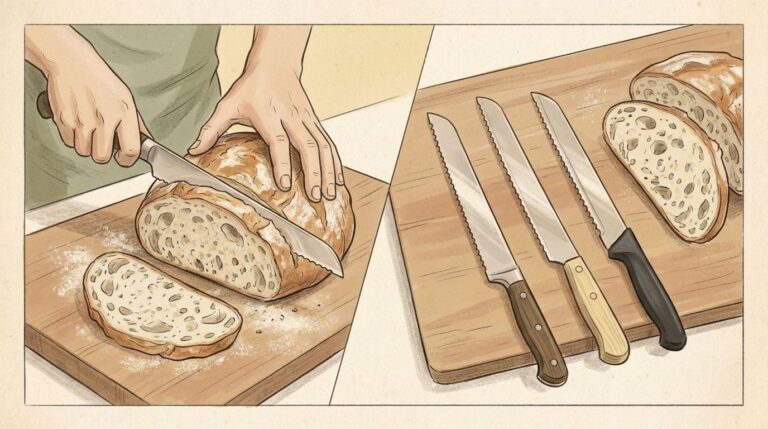
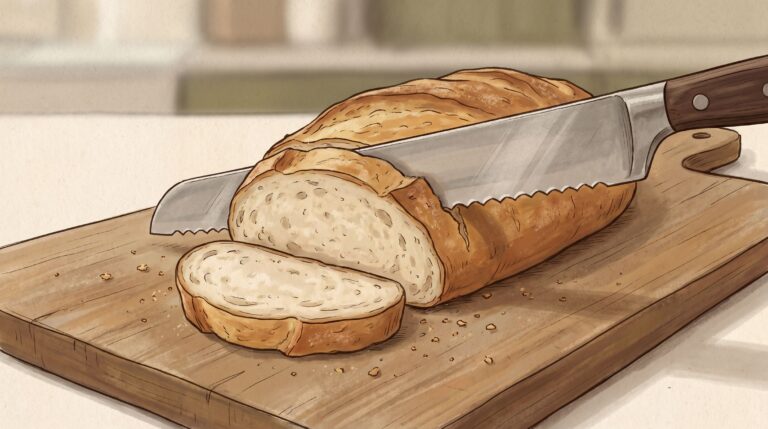
No. A bread knife has aggressive serrations built for sawing through hard crusts. A carving knife has a smooth edge meant to glide through cooked meat. They look similar at a glance but solve different problems.
The Bottom Line
A carving knife is a holiday knife for most home cooks. You will not reach for it on a Tuesday night. But when you carve a turkey, ham, brisket, or prime rib, nothing else cuts as cleanly with as little effort.
A 9 or 10 inch blade with a fork is the standard setup. A 12 inch granton-edge slicer if you barbecue.
Once you have the essential kitchen knives covered and a way to keep them sharp, this is the next blade worth adding.